Aaron Thiara: The Powerful Rise of EastEnders’ Dangerous Ravi Gulati
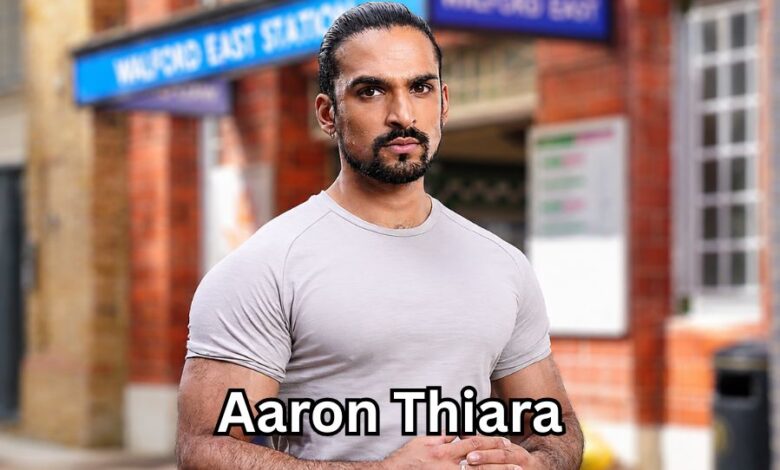
From classical theatre to award-winning television drama, Aaron Thiara transformed Ravi Gulati into one of Walford’s most compelling modern characters by bringing discipline, control and emotional depth to the role.

Introduction
Aaron Thiara became a recognised name in British television after joining EastEnders as Ravi Gulati, a charming, calculating and dangerous figure whose arrival brought fresh tension to Albert Square. Ravi first appeared on 4 July 2022 as a fellow prisoner of Phil Mitchell, and from the beginning his interest in Kheerat Panesar suggested deeper reasons for entering Phil’s orbit.
The role gave Thiara an opportunity to display a wide acting range. Ravi can appear relaxed, persuasive and protective, but his mood can change without warning. This contrast has made him more than a conventional soap villain. He is shaped by ambition, family conflict, violence, loyalty and emotional damage.
Quick Bio
| Category | Details |
|---|---|
| Full Name | Aaron Singh Thiara |
| Known As | Aaron Thiara |
| Date of Birth | 4 May 1993 |
| Age | 33 years old, as of July 2026 |
| Birthplace | Wolverhampton, West Midlands, England |
| Nationality | British |
| Profession | Actor |
| Education | East 15 Acting School |
| Years Active | 2013–present |
| Famous Role | Ravi Gulati in EastEnders |
| Notable Television Work | EastEnders and The Boy with the Topknot |
| Theatre Experience | Royal Shakespeare Company and Shakespeare’s Globe |
| Notable Productions | As You Like It and The Taming of the Shrew |
| Major Award | Villain of the Year at the 2023 British Soap Awards |
| Best Known For | His charismatic, ruthless and unpredictable portrayal of Ravi Gulati |
Who Is Aaron Thiara?
Aaron Thiara is a British actor best known for playing Ravi Gulati in the BBC soap opera EastEnders. Born in Wolverhampton, he developed his craft through professional training in drama and years of stage work before becoming widely recognised on television.
Thiara trained at East 15 Acting School, where his studies included acting and stage combat. This background helped him build the physical confidence and controlled presence that later became central to Ravi. Before arriving in Walford, he worked in theatre with respected companies, including the Royal Shakespeare Company.
Aaron Thiara’s Theatre Background
Thiara appeared in major classical productions before becoming a regular on EastEnders. His Royal Shakespeare Company credits included As You Like It and The Taming of the Shrew. Performing Shakespeare demands vocal control, precise movement and a strong understanding of character motivation.
His theatre experience explains why Ravi often feels physically commanding without relying entirely on dialogue. Thiara communicates suspicion, aggression and calculation through posture, silence and small changes in expression.
How Stage Training Shaped Ravi Gulati
Stage combat requires timing, discipline and an awareness of how movement supports a story. Thiara’s training allows him to make Ravi appear threatening while keeping the performance controlled and believable.
This is particularly valuable in a television soap, where confrontations must feel immediate while also revealing something important about the characters. As a result, Ravi’s physical confidence suggests that he is accustomed to danger and rarely feels intimidated.
Aaron Thiara’s Arrival as Ravi Gulati
Ravi entered EastEnders through a prison storyline involving Phil Mitchell. Phil had made an enemy behind bars and turned to Ravi for assistance, so Ravi initially appeared to be a useful ally. However, his questions about Kheerat Panesar showed that his interest extended beyond prison politics.
The character was originally introduced as the son of Ranveer Gulati, a family friend connected to the Panesars. Later developments revealed that Ravi was actually the biological son of Nish Panesar, making him part of the Panesar family by blood and deepening the conflict surrounding his identity, relationships and loyalties.
Why Ravi Gulati Immediately Stood Out
Ravi’s appeal comes from contradiction. He can appear charming and reasonable, yet he becomes ruthless when his interests are threatened. He does not create chaos without a purpose; instead, he studies the people around him and decides how far he is willing to go to achieve his goals.
Thiara gives Ravi enough warmth to make his relationships believable. Viewers can understand why other characters trust him, fear him or become emotionally involved with him. That complexity keeps Ravi from becoming predictable and allows him to remain interesting across different storylines.
The Importance of Ravi’s Panesar Connection
The Panesar family has been central to several major EastEnders storylines involving power, reputation, crime and generational conflict. Because Ravi is connected to Nish, Suki and Kheerat, he is placed inside an already complicated family structure.
He is both an insider and an outsider. Ravi shares the family’s history, but he spent much of his life separated from its identity and security. His desire for recognition helps explain why control, respect and status matter so much to him.
The Acting Qualities Behind Ravi’s Success
Aaron Thiara plays Ravi with impressive restraint, which helps define the character’s menace. Rather than presenting danger through constant shouting or aggression, he often uses a calm voice and controlled expression. This makes the character more unsettling because viewers cannot always predict when his pleasant manner will disappear.
Thiara is also effective in emotional scenes. Ravi’s relationships with his children and relatives reveal a more human side, even when his choices remain morally troubling. These moments do not excuse his behaviour, but they show the pressures, disappointments and emotional wounds that influence him.
Ravi Gulati as More Than a Soap Villain
The strongest villains usually believe that their actions are understandable or necessary. Ravi rarely sees himself as evil, so he often behaves as though power and violence are simply tools that must be used in a dangerous world.
This personal logic gives Aaron Thiara more material to explore. Ravi can be protective in one scene and threatening in the next without becoming inconsistent. His behaviour shifts according to what he believes he is about to lose.
Balancing Charm and Menace
One of Thiara’s greatest strengths is his ability to move naturally between charm and menace. Ravi can make another character feel comfortable before suddenly changing the emotional atmosphere of a scene.
This unpredictability creates suspense without requiring constant physical conflict. A quiet conversation involving Ravi can feel as dangerous as an open confrontation because the audience understands what he may be capable of doing.
Recognition for Aaron Thiara’s Performance
Aaron Thiara’s work received major industry attention soon after his arrival in Walford. In 2023, he won Villain of the Year at the British Soap Awards for his portrayal of Ravi Gulati.
The achievement was significant because successful soap villains must remain believable across frequent episodes, hold the audience’s attention and generate strong emotional reactions. Thiara achieved this while giving Ravi enough complexity to support long-running storylines.
His success also demonstrated how quickly he had established himself alongside actors who had been part of British continuing drama for many years. Ravi did not feel like a temporary addition. Through Thiara’s performance, he became closely connected to the future of the Panesar family.
Why Aaron Thiara Matters to Modern EastEnders
Aaron Thiara brought new energy to EastEnders as the Panesar family became increasingly important. As a result, Ravi expanded the family’s history and introduced conflicts involving fatherhood, loyalty, romance, business and criminality.
Soap production moves quickly, and actors must communicate complicated emotions within limited screen time. Thiara’s theatre technique helps him make even quiet scenes feel tense and meaningful.
Ravi works as a villain, father, son, businessman and emotionally damaged man seeking status. That flexibility gives the writers several directions for the character while allowing Thiara to keep developing the performance.
Aaron Thiara’s Contribution to British Soap Drama
Thiara’s casting shows the value of bringing professionally trained performers into continuing television drama. His theatre background gives him a disciplined approach, while the soap format allows him to develop a character over hundreds of scenes.
Unlike a short film or limited television series, EastEnders requires actors to maintain character consistency while responding to new storylines. Thiara has preserved Ravi’s central qualities while revealing different sides of his personality.
(FAQs)
Who is Aaron Thiara?
Aaron Thiara is a British actor known primarily for portraying Ravi Gulati in the BBC soap opera EastEnders. He also has professional experience in classical theatre and stage combat.
When did Aaron Thiara join EastEnders?
Aaron Thiara first appeared as Ravi Gulati on 4 July 2022 during a prison storyline involving Phil Mitchell.
Is Ravi Gulati Ranveer’s son?
Ravi was initially presented as Ranveer Gulati’s son. The programme later revealed that Nish Panesar is Ravi’s biological father, connecting him directly to the Panesar family.
What award did Aaron Thiara win?
Aaron Thiara won Villain of the Year at the 2023 British Soap Awards for his performance as Ravi Gulati.
What did Aaron Thiara do before EastEnders?
Before joining EastEnders, Thiara trained in acting and stage combat and performed in theatre, including productions with the Royal Shakespeare Company.
Conclusion
Aaron Thiara has made Ravi Gulati one of the most memorable additions to modern EastEnders. His classical training, physical discipline and emotional control allow Ravi to move convincingly between charm, menace and vulnerability.
What began as a mysterious prison connection developed into a major Panesar family story with lasting consequences for Walford. Thiara’s award-winning performance shows how a skilled actor can transform a dangerous character into someone audiences may fear, question and still want to understand.